The Oxalate Conundrum: Good Foods Gone Bad?
- May 30, 2026
You thought you were doing your health a favor when you piled on the spinach and munched on soybean crackers. After all, these nutrient-dense foods are often glorified in health and fitness circles. But if we told you these green goodies could potentially mess with your kidneys, would you spit out that tofu already in your mouth? That’s right, food-freaks - the plot thickens as we dive into the oxalate abyss.
Spinach, that leafy superhero chock-full of antioxidants, vitamins A and K, fiber, and about 970 mg of oxalates per 3.5-ounce serving, has been playing double agent. You can cut oxalate levels by 30% to 87% by boiling your greens, but hold the heat – we’re not done yet.
Sharing the dubious honor of an oxalate overdose are rhubarb leaves and Swiss chard, with their hefty oxalate levels of 800mg and 874-1,458 mg per 3.5-ounce serving respectively. And to all the soy-lovers out there – waving your tofu flags high – prepare to be heartbroken. Soy protein, soybean crackers, and tofu come packing too, with 496 mg, 207 mg, and 275 mg of oxalates per serving, respectively.
Sure, the exception to this tofu travesty is the calcium-added variant. The calcium in this tofu binds with the oxalates, reducing oxalate absorption in the intestines. But not all heroes wear capes. Others come boiled – like beets – packed with nutrients but also heavy with roughly 675 mg of oxalates in a two-beet serving.
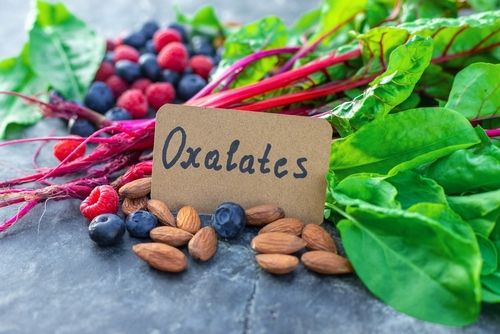
Even the sweetly innocent sweet potato and the sinfully delightful dark chocolate aren't free of the oxalate reach – containing 496 mg and 117 mg per 3.5-ounce serving respectively. Other good-foods-gone-bad include white beans, nuts, wheat bran, and even blackberries containing their fair share of oxalates.
A low-oxalate diet could prove beneficial if your pee is astonishingly oxalate-rich, as excessive amounts binding with calcium could pave the painful path to kidney stones. Seek your healthcare provider’s wisdom on this, and while you're at it, consider pairing moderate- to high-oxalate foods with calcium-rich buddies to minimize the stone threat.
So, will you go cold turkey on these oxalate-rich foods or simply play the moderation game? Either way, remember to keep the hydration high. H2O remains your fail-safe ally in flushing out those pesky oxalates.